AI in Technical Writing
Modern technical writing is increasingly powered by AI-assisted workflows that improve speed, consistency, and collaboration across engineering and product teams.
I use a structured AI-driven approach that combines developer tools, language models, and automated quality checks to produce high-quality, scalable documentation.
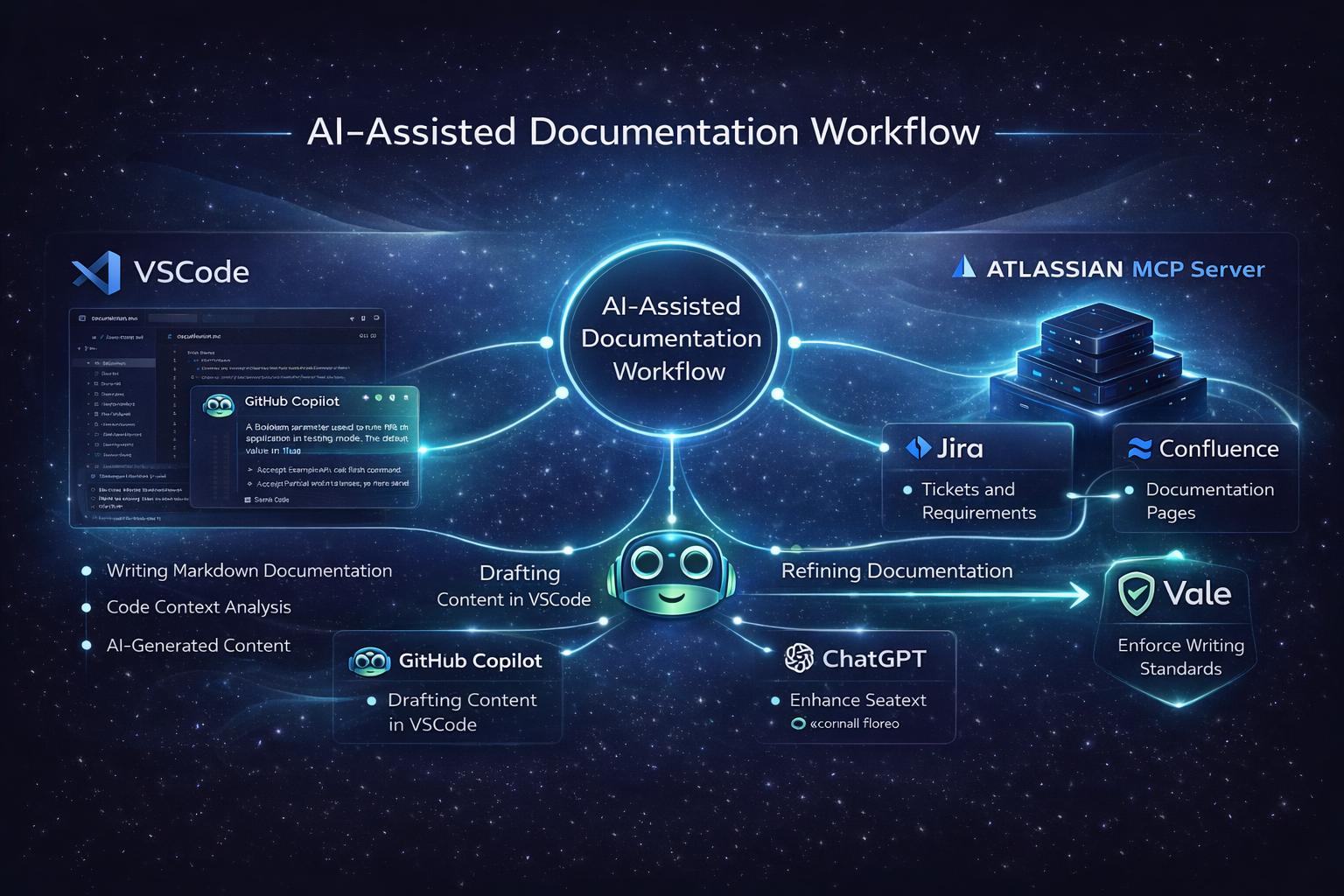
My documentation process follows a structured flow combining multiple AI tools:
Documentation Delivery & Requirements Using Jira & Confluence
- Managing requirements, epics, and user stories in Jira.
- Reviewing HLDs and technical specifications in Confluence.
- Gathering all relevant product and engineering context before writing.
- Aligning documentation with the product development lifecycle.
Integration with Engineering Workflow Using Atlassian MCP Server
- Fetch requirements from Jira.
- Access and update documentation in Confluence.
- Integrate documentation into real engineering workflows.
- Align documentation with the product development lifecycle.
Drafting Using VSCode and GitHub Copilot
- Writing documentation in Markdown using VSCode.
-
Using GitHub Copilot to:
- generate documentation from code context.
- suggest API descriptions and usage examples.
- accelerate initial drafts based on requirements and technical inputs.
Content Refinement Using ChatGPT (Organizational Access)
- Improve clarity and readability.
- Restructure complex technical content.
- Adapt tone for different audiences (developers vs end-users).
- Ensure consistency across documentation.
Quality & Standards Using Vale
- Using Vale to enforce documentation quality:
- style guide validation.
- terminology consistency.
- grammar and readability checks.
- Automating content validation across documentation sets.
- Adapt tone for different audiences (developers vs end-users).
- Ensuring scalable and maintainable documentation standards.